Worship (knightly honor)
Le Morte d'ArthurIn Malory’s account, “worship” is the honor and standing a knight wins through public deeds, but it is never reducible to victory alone. It is tested in combat, measured by endurance and courtesy, awarded before witnesses, and sometimes surrendered for loyalty or restraint. The repeated contests over who deserves worship show a chivalric world in which reputation is both a prize and a moral judgment.
Meaning and Public Recognition
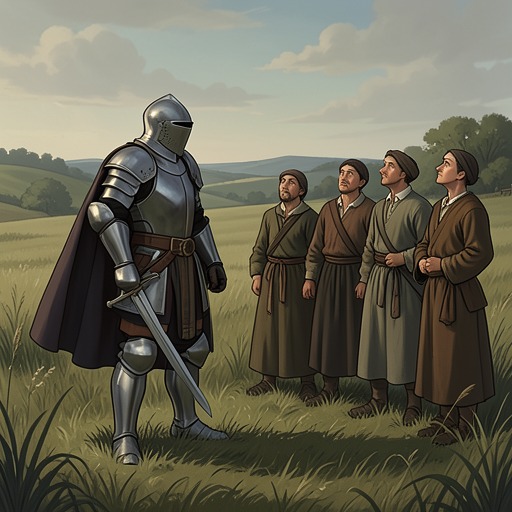
Worship is a social currency: it gives a knight distinction among peers and can be conferred by the king, the court, or the assembled participants at a tournament. Arthur’s own accession gives the concept a political counterpart. After Uther’s death, Arthur draws the sword before the lords and commons; the people acclaim him, and he forgives those who had delayed him. He then swears to rule with true justice. His authority is thus publicly recognized, and the act of forgiveness accompanies the recognition rather than following as an afterthought. In a different register, the Round Table knights are repeatedly sworn to avoid outrage and treason, show mercy, and aid ladies. Honor is not simply what spectators applaud: it is also conduct constrained by obligations.
Prowess, Judgment, and the Tournament
At the tournament, worship is made visible through feats of arms, but the crowd and judges must interpret what those feats mean. Sir Lamorak demonstrates exceptional prowess by unhorsing kings and striking down thirty knights. Even the Duke of Chaleins forbids his own knights to attack Lamorak, saying that it would shame good knights to do so. Queen Guenever and the high prince declare that they have never seen a knight perform such deeds on horseback. When the day’s fighting ends, the heralds award Lamorak the prize. His achievement is not merely a count of opponents beaten: it has become a publicly witnessed standard against which other knights are judged.
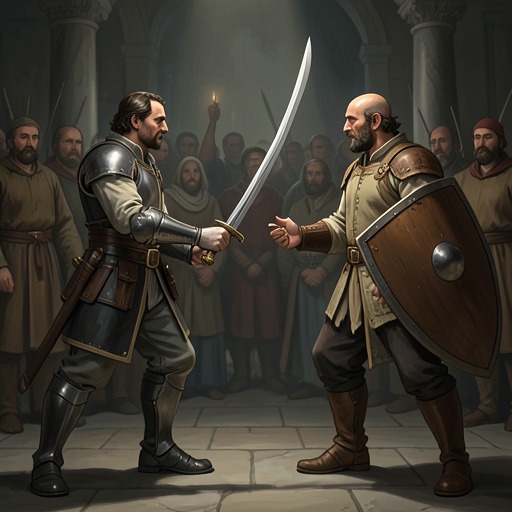
Sir Launcelot’s conduct complicates the link between force and honor. In a later tournament, he is angered when Sir Ector de Maris is thrown by Sir Palamides and advances against Palamides. Palamides asks for mercy, saying that he has done more that day than ever before and that taking the prize from him would take away the greatest worship he has won. Launcelot recognizes both Palamides’s labor and the cause for which he is fighting. He lets him keep the day’s honor, although he warns him that his love may be discovered. Palamides then acknowledges the contrast: he had acted discourteously, while Launcelot had answered him courteously. In this scene, the knight with the greater power to impose a result earns distinction by declining to do so.
The tournament’s award system also distinguishes between kinds of achievement. Arthur and the other kings give Palamides the day’s honor because he began first, remained in the field without resting or changing his equipment, and continued fighting on foot and on horseback. The decision emphasizes duration and persistence, not just a spectacular encounter. Launcelot, however, judges that Palamides deserves the prize while adding that a better knight was present and would prove it before they departed. The difference between an award for that day and a broader ranking of knightly excellence remains unresolved, keeping worship open to further contest.
Rivalry, Fellowship, and the Cost of Reputation
Sir Dinadan’s mockery turns worship into a provocation. He calls Sir Tristram a coward because Tristram has not performed as Dinadan thinks he should, hoping to make him angry enough to fight more fiercely on the following day. Dinadan’s insults are tactical rather than a settled judgment: he knows Tristram’s temper and uses it to influence the contest. Tristram answers that no earthly knight has called him a coward before, yet he also praises Launcelot as peerless in courtesy and generosity. His response places personal reputation within a wider vocabulary of knightly qualities.
Palamides’s response to Launcelot further shows that worship can create allegiance. Having received mercy after his discourtesy, he promises to remain Launcelot’s knight for life. He says that if Launcelot had answered him with equal ungentleness, he would not have won worship. The episode makes honor relational: one knight’s restraint shapes another’s reputation and sense of obligation. The prize awarded in public gives way to a lasting debt of respect.
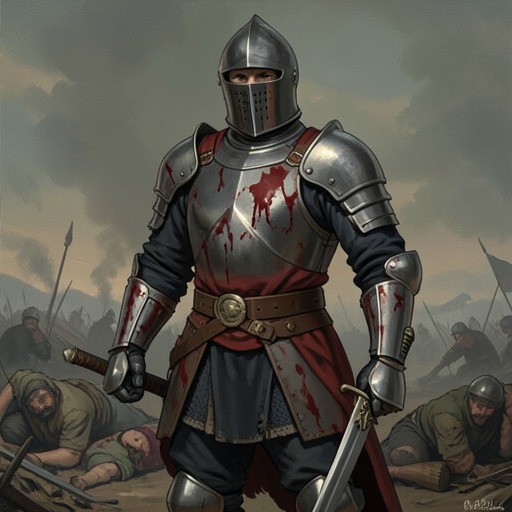
A later tournament divides that fellowship. Tristram decides to join Arthur’s side because he cannot bear to see Arthur and Launcelot dishonored, and Sir Gareth and Dinadan agree. Palamides refuses to change sides, saying that he will remain with the party he joined. Once fighting turns against his side, he laments that he has lost all the worship he won. He withdraws to a well, removes his armor, and weeps; the kings who find him restore his horse and urge him to arm again. Tristram, meanwhile, asks that the prize be given to Launcelot rather than himself, but Launcelot will not accept that preference, and the honor is divided between them. The scene sets two claims against each other: the fellowship that draws Tristram across the field, and Palamides’s attachment to the side he had already chosen. Reputation can be won in combat, but a reversal of allegiance can make its value painfully fragile.
Honor Beyond the Field
Worship also organizes service and political obligation. After the battle against the eleven kings, Merlin advises Arthur to give the captured goods to King Ban and King Bors so they can reward their knights. Ban and Bors distribute the goods freely, strengthening the willingness of those who serve Arthur. The reward is material, but its purpose is relational: good service receives recognition, and recognition supports future loyalty.
The same concern for honorable conduct informs Arthur’s rules for the Round Table. Knights must avoid treason and murder, give mercy to those who ask it, and aid ladies on pain of losing their honor and lordship. These rules place worship under an ethical standard, even as tournament scenes show how readily it becomes competitive and contingent. The term therefore binds public acclaim to a code of conduct, while leaving room for conflict over who has earned it and what obligations honor demands.
Across the narrative, worship is won, awarded, threatened, and sometimes freely yielded. Lamorak’s prowess, Palamides’s endurance, Launcelot’s mercy, Tristram’s allegiance, and the distribution of battle spoils present different routes to standing. Because the reputation is public, it can be celebrated by the court or wounded by a change in fortune; because it is moral as well as martial, a gracious act may matter more than taking the prize. The recurring contests make worship both an engine of rivalry and a measure by which chivalric fellowship is judged.